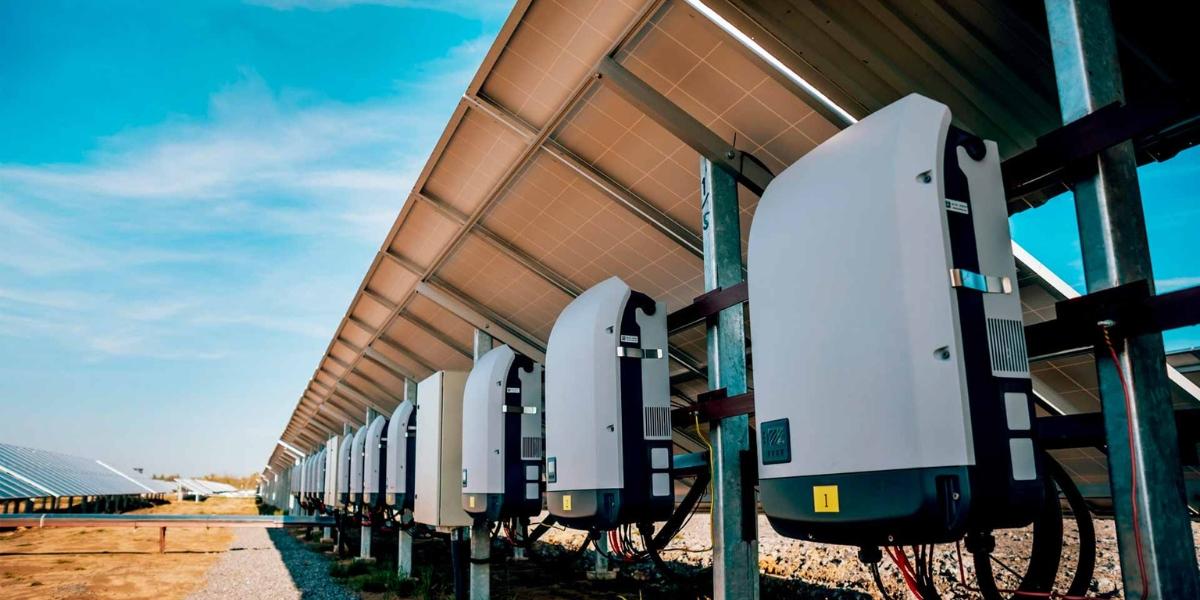
The inverter of a solar panel installation is a fundamental and mandatory equipment for any photovoltaic installation, whether it is connected to the grid or if it is an off-grid solar installation. Understanding its operation and knowing which type and power to choose is one of the first steps to consider installing solar panels in your home, business, or industrial warehouse.
Discover how to install solar panels and what to consider in this quick guide.
What is a solar inverter?
The solar inverters are current transformers. They convert the direct current from the solar panel system to which they are installed into alternating current, which is used for home or business consumption, to store in solar batteries, or to feed into the electrical grid.
The operation of the solar inverter, also known as photovoltaic inverter, begins when the solar panels receive light. At this moment, current is generated due to the movement of electrons present in the silicon cells of the solar panels, and the inverters work by converting this current into alternating current, which is used by household appliances and common electrical devices.
What is a solar inverter used for?
In addition to their main function of converting direct current into alternating current, inverters also serve to monitor, analyze, optimize, and protect the solar installation.
Protection of the installation: In the event of an anomaly, these can stop production to avoid electrical risks.
Supervision of the installation: Owners or installers can easily check the status of the system.
Analysis of the solar system: Obtaining information and diagnostics about the installation.
Performance optimization: General optimization that allows for increased performance and savings in the medium term.
Types of solar inverters
Depending on the type of installation and the use it will be given, there are two types of inverters that you should know and be able to differentiate. These are:
Grid-tied solar inverter
The grid-tied inverters allow for the conversion of the current from solar panels to alternating current for use and consumption in homes, as well as for feeding excess energy into the grid. These inverters do not allow for energy storage, and therefore, installations that use grid-tied solar inverters will not be able to install batteries.
Hybrid solar inverter
The hybrid inverters do allow for energy storage, meaning they can connect batteries and storage systems to their solar installations. Additionally, they perform the same functions as the grid-tied model: converting current for domestic use and feeding excess energy back into the electrical grid.
Choosing a grid inverter or a hybrid inverter is the same as deciding whether the photovoltaic system will have batteries to store energy, whether they are installed from the beginning or later on.
Which inverter to choose?
To summarize and help you choose the ideal solar inverter for your installation, the important keys to consider are the size of the installation, the current and future application it will be given, and the budget. In addition to the circumstances of the location where it will be installed and the energy needs.
Power of the solar inverter
The solar inverter must be able to handle the capacity of the installed solar system or the one that is going to be installed, that is, if the solar panels produce 3.5 kWp, the inverter should not have a lower power rating. If it does, some of the energy produced by the panels would be lost and could not be fully utilized. It is also not advisable to exceed with an inverter that is much more powerful than the capacity produced by the panels, as this would lead to unnecessary and counterproductive electricity consumption.
Energy efficiency of the solar inverter
First-class and manufacturer photovoltaic inverters usually have a proven efficiency of over 95%. In all the GroupSumi solar inverters, you can check the efficiency of each one, and we recommend investing in a high energy efficiency one.
Where to buy a solar inverter?
At GroupSumi, we distribute and stock the complete range of solar inverters from GoodWe, Huawei, and SMA. As distributors, we have all the components and information about these devices, as well as competitive and adjusted prices.
Do you need help choosing? Write to us at info@groupsumi.com detailing what type of installation you have or wish to have, as well as all the technical aspects you can, and our sales team will assist you and propose the best options.