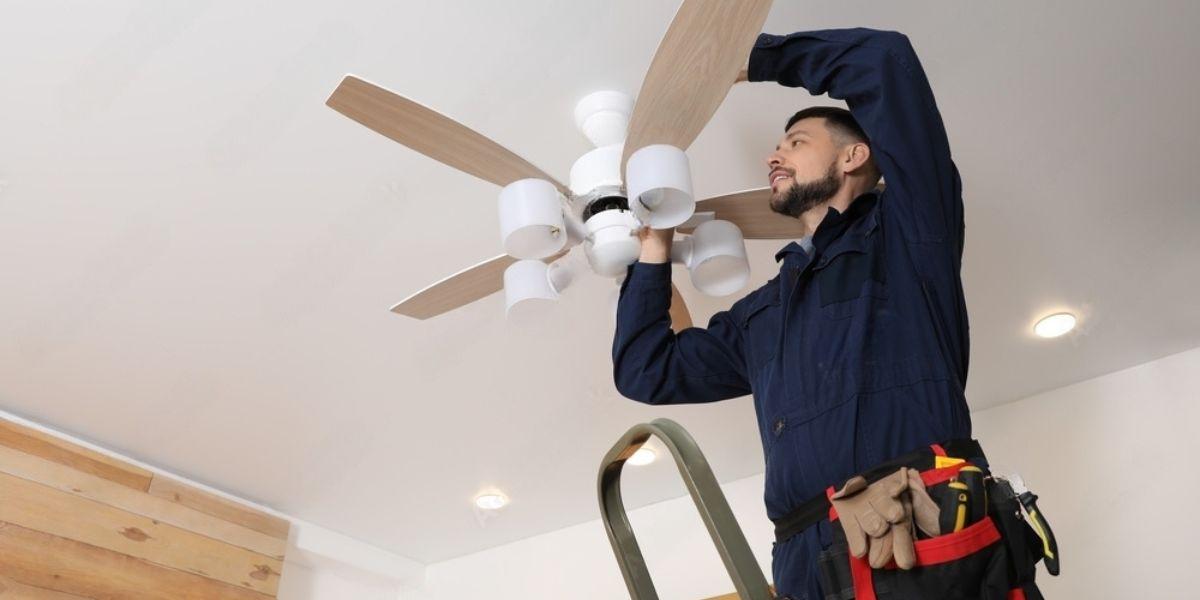
How to Install a Ceiling Fan? Steps to Follow
Why Consider the Type of Ceiling
The choice of the right ceiling fan also depends on the type of ceiling where you plan to install it. Here are some additional details you should consider based on the type of ceiling:
1. Ceiling
If you have a flat or standard ceiling, the installation is generally easier. You can choose from most ceiling fan models without worrying about mounting issues.
2. Sloped Ceiling
Sloped ceilings require a special installation kit that allows the fan to hang properly and operate efficiently. Make sure to follow the manufacturer's instructions to install the kit correctly.
3. High Ceiling
In rooms with high ceilings, it is important to lower the fan to an appropriate height so that air circulates effectively. This is achieved by using an extension pole that is included in many ceiling fan kits.
4. Suspended Ceiling
If you have a suspended ceiling or a false ceiling, you must ensure that the structure can support the weight of the fan. Consult a professional if you have doubts about the feasibility of the installation.
Steps to Install a Ceiling Fan
Step 1: Preparation for Installation
The first step is to turn off the electrical current in the circuit to which the fan will be connected. This will be crucial to ensure safety during the installation.
Next, we should gather all the necessary tools, such as screwdrivers, pliers, a voltage detector, and a ladder. Additionally, check that you have all the parts and components of the ceiling fan according to the manufacturer's instructions.
Once we have all the materials, accessories, products, and the electrical installation prepared, it will be time to proceed with the assembly.
Step 2: Mounting the Ceiling Fan
We will start by installing the fan mount on the ceiling, so as we mentioned earlier, we must take into account the type of ceiling where we are going to install the fan..
Make sure it is securely fastened and level to avoid vibrations or annoying noises.
Next, we will connect the electrical wires following the instructions provided in the fan manual, as long as we have the electrical installation completed. Keep in mind that if this is not the case, we must carry it out prior to mounting the fan bracket.
To proceed with the completion of the assembly, make sure to attach the fan blades to the motor, ensuring they are equidistant for optimal performance.
Keep in mind that each manufacturer has its processes, and that is why it will be important to follow the specific instructions for each particular model.
Step 3: Review of the Installation
After completing the installation, it is essential to conduct a thorough review
:Make sure all electrical connections are secure and well insulated.
Do not leave loose wires or exposed connections.
Manually spin the fan blades to check for any obstructions or rubbing. They should spin freely.
Turn on the power and test the fan at each speed and function (if it has lights, make sure they work properly).
Listen carefully for any unusual noises, as this could indicate a problem with the installation.
Once the entire checklist has been completed, we can consider the installation of the ceiling fan finished.
Benefits of Having a Ceiling Fan
Energy efficiency: Compared to air conditioners, ceiling fans are significantly more efficient in terms of energy consumption. They use a fraction of the electricity that an air conditioning system would require to maintain the same temperature in a room. This translates into significant savings on your electricity bill, especially during the warmer months.
Uniform air distribution: One of the most notable benefits of ceiling fans is their ability to maintain a uniform temperature in a room. By constantly circulating the air, they prevent the formation of hot and cold spots. This creates a more comfortable environment and reduces the need to constantly adjust the temperature.
Additional lighting: Many ceiling fan models come equipped with built-in lights. This feature is especially useful in rooms where lighting is crucial. Ceiling fans with integrated lights eliminate the need to hang additional lamps, saving space and providing a functional source of light.
Decoration and style: Ceiling fans are not only practical, but they can also enhance the aesthetics of a room. They are available in a wide variety of designs, styles, and finishes to suit any interior decor. Whether you prefer a modern and sleek look or something more traditional, there is a ceiling fan that fits your tastes and needs.
Maintenance and Care to Consider
Once your ceiling fan is up and running, it is essential to maintain it properly to ensure its efficiency and long-term durability. Here are some maintenance and care tips you should keep in mind:
1. Periodic Cleaning
To maintain the optimal performance of the ceiling fan, it is important to regularly clean the blades and the motor housing. Dust and dirt can accumulate over time and reduce airflow efficiency. Use a soft cloth or a brush to remove the dust. If the blades are removable, you can wash them with water and mild soap.
2. Lubrication
The motor bearings may require periodic lubrication to avoid annoying noises and ensure smooth operation. Check the fan manual for specific instructions on proper lubrication and the recommended frequency.
3. Cable Inspection
Regularly check that the electrical wires are in good condition. Look for signs of wear, fraying, or damage. If you find any issues, disconnect the power and replace the wires immediately.
4. Tightening of Screws
Over time, screws and bolts can loosen due to the vibration of the fan. Regularly inspect all connections and tighten any loose screws or bolts to avoid future problems.