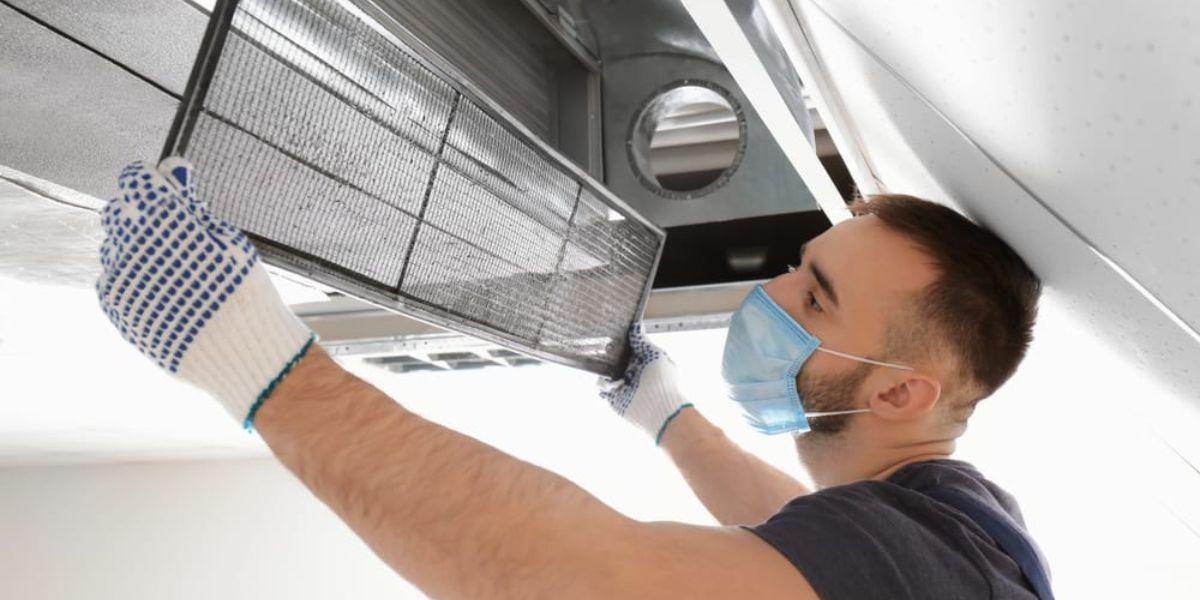
If you have an air conditioner at home or in the office, it is important to keep it clean to ensure that it is functioning properly and to avoid health issues such as legionella. Although the cleaning process may seem overwhelming at first, follow this step-by-step guide to ensure that you do it safely and effectively.
👉 First of all, it is essential to ensure that the air conditioner is turned off and disconnected from the power supply. Additionally, you may need some basic tools to carry out the job, such as a screwdriver, a soft-bristle brush, and a vacuum cleaner.
Steps to Clean an Air Conditioner
Step 1: Clean the air filter
The first step to keeping an air conditioner clean is to regularly clean the air filter. The air filter is located at the front or back of the unit and is essential for keeping the air clean and fresh. If the filter is dirty, air will not be able to pass through it properly, which will reduce the performance of the air conditioner and increase energy costs.
To clean the filter, remove the cover of the air conditioner and take out the filter. Then, use a vacuum cleaner or a soft-bristle brush to remove the dust and dirt. If the filter is very dirty, you may need to wash it with water and let it dry completely before putting it back in the unit.
Step 2: Clean the evaporator and condenser coils
The evaporator and condenser coils are responsible for cooling and heating the air. If they are dirty, they will not be able to do their job properly, which will reduce the efficiency of the air conditioner and increase energy costs. To clean the coils, follow these steps:
Remove the cover of the air conditioner and locate the evaporator and condenser coils.
Use a soft-bristle brush to remove dust and dirt from the coils. Make sure not to bend or damage the fins of the coils.
If the coils are very dirty, you can use a specialized coil cleaner to clean them.
Step 3: Clean the drain trays and the drain.
The air conditioner produces water when it cools the air, and this water is collected in a drainage tray and removed through a drain. If the drainage tray or the drain are dirty, they can produce bad odors and cause health problems. To clean the drainage tray and the drain, follow these steps:
Locate the drain pan and the drain at the back of the air conditioner.
Use a soft-bristle brush and soapy water to clean the drain pan.
Once it is thoroughly cleaned, we should dry it and reassemble it in the air conditioner.
Check that its operation is still correct.
Another aspect to consider is the air filter. This component of the air conditioner is responsible for filtering the air that is drawn into the system to cool it and then release it into the room. Therefore, it is important to keep it clean and in good condition. To do this, we should remove it and clean it every 3 to 6 months, depending on how much the device is used.
How to clean the Air Conditioner filter 👇
To remove the filter, we first need to locate its position in the air conditioner. In most cases, it is found at the front of the unit, behind a small door or grille. Once we have located it, we should carefully remove it following the instructions in the user manual. If you do not have the manual on hand, you can look for it online or contact the manufacturer.
Once we have removed the filter, we can proceed to clean it. For this, we can use a vacuum cleaner to remove the accumulated dirt and dust. If the filter is very dirty, we can wash it with warm water and mild soap. After cleaning it, we must ensure that it is completely dry before putting it back in the air conditioner.
Expert Tip®
Another important tip for keeping our air conditioner clean is to avoid obstructing the air outlets. To do this, we must ensure that there are no objects placed in front of the unit that could block the airflow. Additionally, it is also advisable to clean the air outlets regularly to prevent the accumulation of dust and dirt.
Advantages of cleaning the air conditioner
Greater energy efficiency, as it will provide better climate control in the home with the same energy.
Reduction of bad odors, since having a clean filter will prevent the accumulation of dirt.
Higher air quality as well as a reduction in respiratory problems.
Additionally, we will reduce the potential breakdowns of the air conditioning unit.