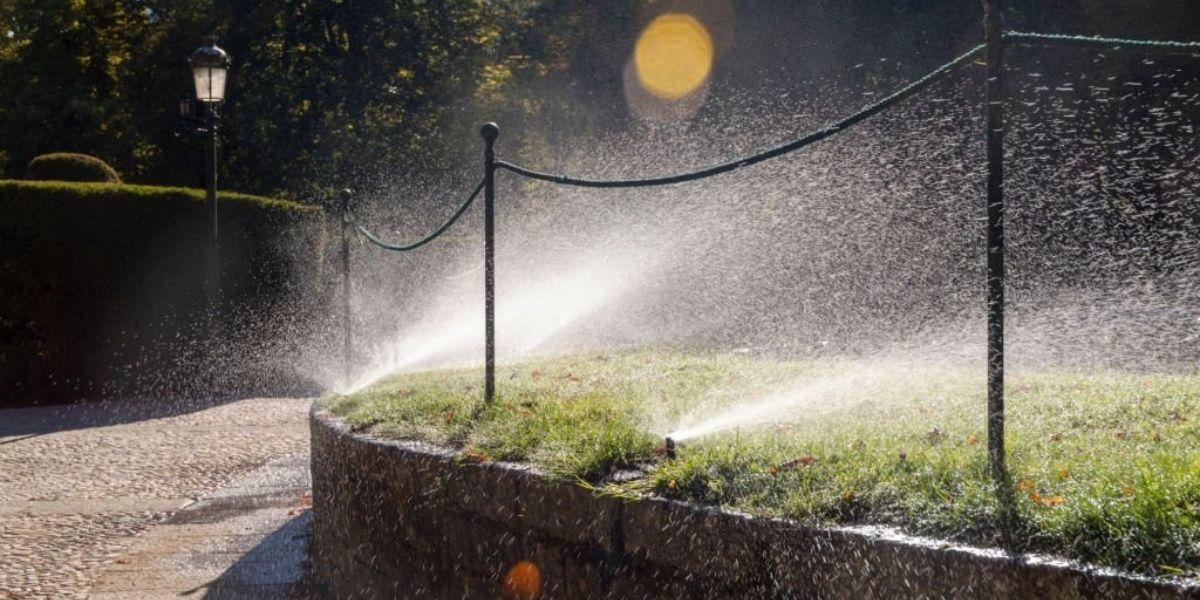
Automatic irrigation is one of the best options you can choose if you are a garden lover and appreciate nature. It will help you maintain an optimal ecosystem, as you will be able to forget about your plant watering tasks with automatic irrigation.
You can find answers to all the questions you may have about automatic irrigation in this article, where we thoroughly break down automatic irrigation.
Benefits of Automatic Irrigation
Water savings: In order to save water both economically and environmentally during the drought episodes we are experiencing this year, automatic irrigation is an excellent tool to curb water waste.
Convenience: You will have total freedom as automatic irrigation takes care of all the necessary watering tasks without the need for human intervention. Depending on the model and its features, we can control it via mobile.
Custom programming: Automatic irrigation allows for custom programming based on the needs that arise, ensuring that no detail is overlooked.
Wireless connectivity: If you have an automatic irrigation model with wireless connectivity, you can manage its operation, water consumption, and other functions that the manufacturer has incorporated from a distance.
Automatic Irrigation Systems
When choosing the type of automatic irrigation system to use in the garden, it is vital to know the specific needs that arise, what type of plants, trees, or grass we need to water, and once we have this information, we can consider the specific system.
Drip Irrigation
Drip irrigation is a highly efficient and precise irrigation technique that has gained popularity in recent years. This system consists of the direct and slow application of water to the roots of plants through small emitters or drippers.
As the water drips slowly, it seeps into the soil, providing direct hydration to the plants efficiently.
Highlighted features and advantages of drip irrigation:
Water efficiency: Drip irrigation is known for its high efficiency in water use. By supplying water directly to the roots of the plants, evaporation and water loss due to climatic factors such as wind are minimized. This reduces water waste and makes drip irrigation a sustainable and environmentally friendly option.
Water savings: By regulating the flow of water through the emitters, you can control the exact amount of water your plants receive. This prevents overwatering and allows you to adjust the amount of water according to the needs of each type of plant. Drip irrigation is especially beneficial in areas where water is scarce or expensive, as it helps you significantly reduce water consumption.
Uniform water distribution: The drip irrigation system ensures uniform water distribution throughout the garden. The emitters are strategically placed close to the plants, allowing for equitable water supply to each one. This prevents the formation of dry areas or waterlogging, promoting healthy plant growth.
Precise control: With drip irrigation, you can have precise control over the amount and frequency of watering. You can adjust the flow rate and duration of watering according to the needs of your plants and the climatic conditions. Additionally, it is possible to set a timer to automate the watering, providing you with convenience and flexibility.
Weed and disease reduction: By providing water directly to the roots of the plants, drip irrigation avoids wetting the leaves and foliage. This reduces the spread of diseases caused by fungi and decreases weed germination, as they do not receive excess water. Consequently, drip irrigation helps maintain a healthier environment for your plants.
Micro-sprinkler Irrigation
Micro-sprinkler irrigation is a highly efficient and precise technique that offers numerous advantages for keeping your garden in optimal condition. It involves the application of small water droplets, dispersed at low pressure, over specific areas of your plants.
Characteristics of micro-sprinkler irrigation:
Uniform distribution: Micro-sprinklers are designed to disperse water evenly over the target area. This ensures that each plant receives the appropriate amount of water, avoiding dry areas or waterlogging.
Flexibility in configuration: Micro-sprinklers can be adjusted in terms of discharge height, spray angle, and water flow rate. This allows the system to be tailored to the specific needs of your plants, both in terms of size and the type of irrigation required.
Adaptability to different terrains: Micro-sprinkler irrigation is suitable for uneven or sloped terrains, as the small water droplets minimize runoff and ensure good absorption by the plant roots.
Wind resistance: Micro-sprinklers have greater wind resistance compared to other irrigation methods, such as conventional sprinklers. This helps to prevent water drift and ensures more precise application in the desired area.
Misting Irrigation
Imagine an irrigation system that refreshes your plants and provides optimal hydration without wasting water. Misting Irrigation is an innovative technique that combines efficiency and convenience to keep your garden in its best condition.
Unlike conventional sprinkler systems, this method uses special nozzles that spray water in the form of mist, creating a fine mist of water that envelops the leaves and the surrounding area of the plants.
Characteristics and advantages of Misting Irrigation
Complete coverage: The water mist produced by Misting Irrigation evenly covers all areas of the garden, including the tallest or hard-to-reach plants. In this way, all plants receive the same amount of water, avoiding dry spots or waterlogging.
Water savings: The fine spray and the ability to cover the entire garden with Misting Irrigation help significantly reduce water consumption. The mist evaporates less quickly than large water droplets, allowing for greater absorption and less water loss due to evaporation. Additionally, the misting system can also be equipped with moisture sensors to monitor and automatically adjust irrigation according to the needs of the plants.
Cool and healthy environment: Misting Irrigation not only hydrates the plants but also refreshes the surroundings. The water mist creates a cooler and more humid environment, especially beneficial in warm climates or regions with high temperatures. This additional coolness can help protect plants from dryness and improve their health and appearance.
Precise control: Misting Irrigation systems offer precise control over the amount and frequency of watering. You can adjust the water pressure, the frequency of misting, and the duration of the watering cycles according to the specific needs of your plants and local weather conditions. Some systems also allow you to schedule customized watering times and adjust the direction and range of the nozzles to suit the characteristics of your garden.
Sprinkler Irrigation
Sprinkler irrigation is a popular and efficient method to keep your garden well-hydrated and thriving. This system uses sprinklers that disperse water in the form of fine droplets over the area to be irrigated.
Characteristics of sprinkler irrigation:
Versatility: Sprinkler irrigation is suitable for gardens of all sizes and shapes, whether large spaces or small green areas. Sprinklers can be adjusted to cover specific areas or even to water in a circular or semicircular pattern.
Coverage control: Sprinklers allow you to control the extent and reach of the irrigation. You can adjust the water pressure and spray angle to ensure that all areas of the garden receive the appropriate amount of water.
Adaptability to different plants: Sprinkler irrigation is compatible with a wide variety of plants, as you can adjust the flow rate and duration of watering according to the needs of each species. It is ideal for watering lawns, shrubs, flowers, and other types of vegetation.
How Automatic Irrigation Works
Automatic irrigation is an intelligent and efficient system designed to keep your plants adequately hydrated without the need for constant manual intervention. It works by installing a set of pipes, sprinklers, or drip emitters strategically located in your garden, connected to a water source and controlled by a timer or an automated system.
The process begins with programming the timer or setting up the automated system. These devices allow you to establish the schedules and duration of watering, according to the specific needs of your plants and local weather conditions.
Once programmed, the automatic irrigation system activates according to the predefined schedule. Water flows from the source through the pipes to the sprinklers or drippers. The sprinklers, which can be spray heads or diffusers, automatically rise from the ground and spray water in a specific pattern, covering a designated area of your garden. The drippers, on the other hand, release water more precisely and directly at the base of the plants, ensuring efficient and controlled hydration.
In addition to scheduled watering, many automatic irrigation systems also use soil moisture sensors to ensure precise irrigation and avoid water waste. These sensors constantly monitor the soil moisture and send signals to the irrigation system. If the moisture level falls below a set threshold, the system activates to provide the necessary amount of water. This prevents your plants from drying out or becoming overwatered, promoting healthy growth.
It is important to highlight that automatic irrigation can be adapted to different types of plants and watering needs. Some systems allow for the configuration of independent irrigation zones, giving you the ability to adjust the flow rate and duration of watering for each area of your garden, according to the individual requirements of the plants located in them.
How can a watering system be automated?
In order to easily automate an irrigation system, you must follow these steps:
Install a timer.
Connect the timer to the water source.
Place electric valves in the irrigation pipes.
Strategically position the sprinklers or drippers.
Set the timer according to your needs.
Conduct tests and adjustments.
Monitor and perform proper maintenance.